ServicesWater Testing & Analysis
Water Testing & Analysis in Kyle
Before you buy a filter or a softener, find out what is actually in your water. We test it at your tap, show you the numbers and tell you plainly what is worth fixing, what can wait and what you can skip.
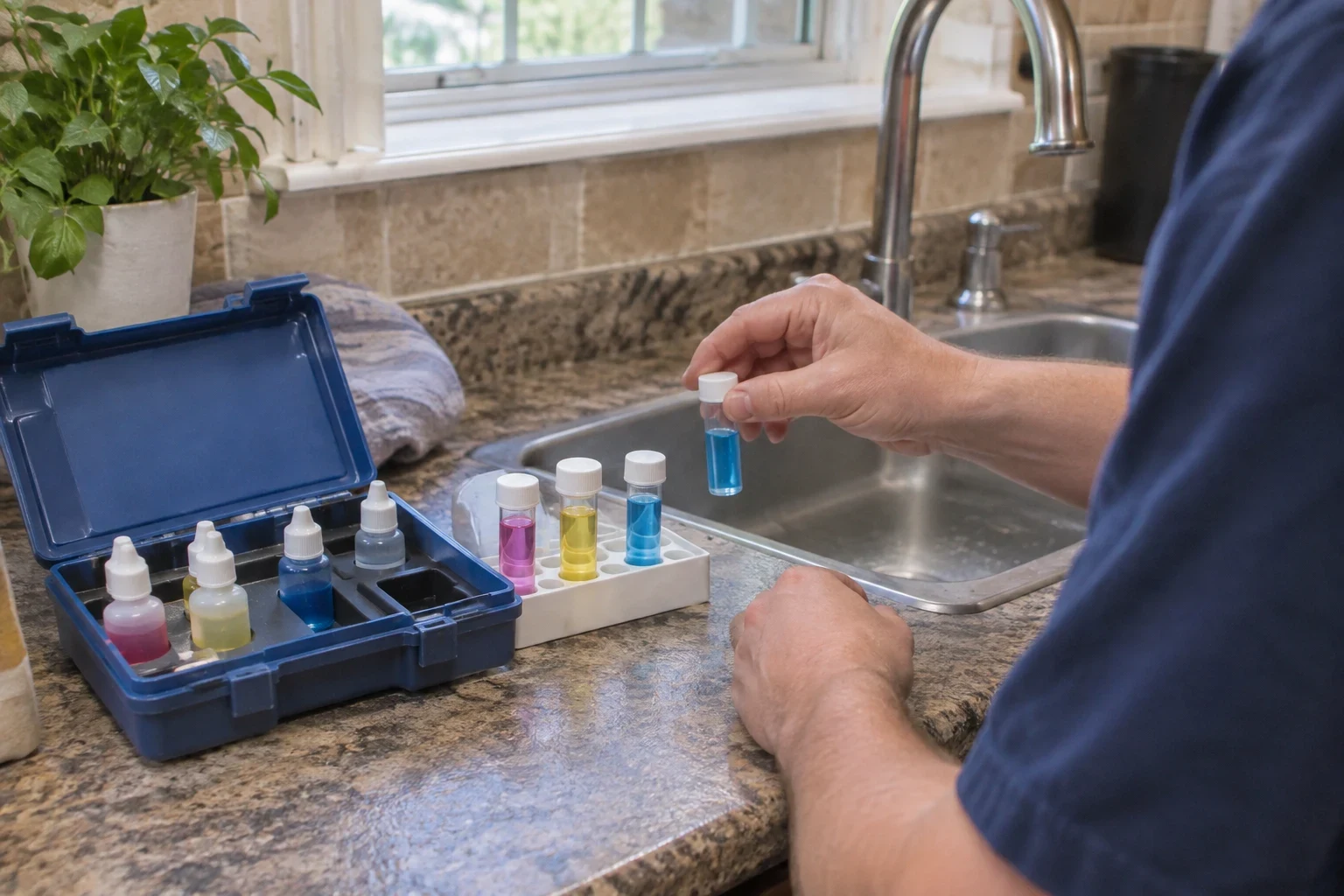
Test first, then decide
Most people call us after they notice something. White crust on the faucets. A chlorine smell from the shower. Spots on glasses that won't wash off. Those are real clues, but they don't tell you how much of what is in the water, and that is what decides which equipment makes sense.
A water test gives you the numbers. We check hardness, chlorine, iron, pH and total dissolved solids right in your home. Water around Central Texas often runs on the hard side from limestone, so hardness is usually the first number we look at. Then we walk you through what each result means for your pipes, your water heater and your drinking water.
The point is planning. Scale builds slowly inside a water heater long before it fails. If you know your numbers now, you can budget for the right fix on your schedule instead of buying something in a hurry after a repair bill.
What the test covers
- Hardness
- We measure calcium and magnesium in grains per gallon. This number tells us whether a water softener or a salt-free water conditioner is worth considering, or whether you don't need either.
- Chlorine
- City water is treated with a disinfectant, and that is a good thing. But it is also what most people taste and smell. We measure the level so you know whether whole-home filtration or a drinking water filter would solve it.
- Iron and pH
- Iron leaves orange and brown stains in sinks and toilets. pH tells us whether the water leans corrosive or scale-forming. Both affect which filter media will work and how long it lasts.
- Total dissolved solids
- TDS is a rough measure of everything dissolved in the water. It helps us judge whether reverse osmosis would make a noticeable difference in what you drink.
- A plain-English explanation
- We go over every result with you at the kitchen table. You get the numbers written down, so you can compare options, talk it over at home or shop around.
When a water test makes sense
Scale on faucets and showerheads
That white, chalky ring around the spout is minerals left behind. What you see on the fixture is also collecting inside your pipes and water heater.
Cloudy glasses, rough towels
Glasses that come out of the dishwasher spotted and towels that dry stiff are classic hard water clues. Testing shows just how hard yours is.
You'd rather buy bottled
If the tap smells like a pool and you keep hauling jugs home from the store, we can measure the chlorine and tell you what would take care of it.
Orange stains or an egg smell
Rust-colored marks in sinks and toilets usually mean iron. A sulfur odor, often worse on the hot side, has more than one possible cause, so we test before recommending anything from our Iron and Sulfur Removal page.
A new-to-you house
You don't know the plumbing yet and you don't know the water. A test sets a starting point before you add any equipment.
Popping from the water heater
Rumbling or crackling in the tank often comes from scale and sediment settled on the bottom. Knowing your hardness lets you plan ahead of a replacement.
What sets the price of a system
The water test costs you nothing. If the results say a system is worth adding, two things drive the quote: what turned up in the test and how the pipes are run in your home. Installation is free, so the number you see is for the equipment itself. Here is what pushes it up or down.
Your test results
A slight chlorine taste might only need a filter at the kitchen sink. Hard water with iron in it can call for more than one stage. We pick equipment from your readings, not from a sales sheet.
Household size
Each extra person and bathroom sends more water through the system every day. That daily demand decides how big the unit has to be.
The type of equipment
Under-sink reverse osmosis, whole-home filtration, a softener and a salt-free conditioner are priced differently. We tell you why one suits your water better than the rest.
Long-term upkeep
Replacement filters, media and softener salt cost money over the years. We list what each choice needs to keep working, so your budget covers more than install day.
Lab testing when needed
A few questions, such as lead from older pipes, can't be settled with an in-home kit. If yours is one of them, we'll tell you and walk through the lab step before anything is ordered.
How a test visit goes
- 1
Give us a call
Tell us what you've noticed and when it's easy for us to stop by. We pick a time that fits your day.
- 2
Sampling in your kitchen
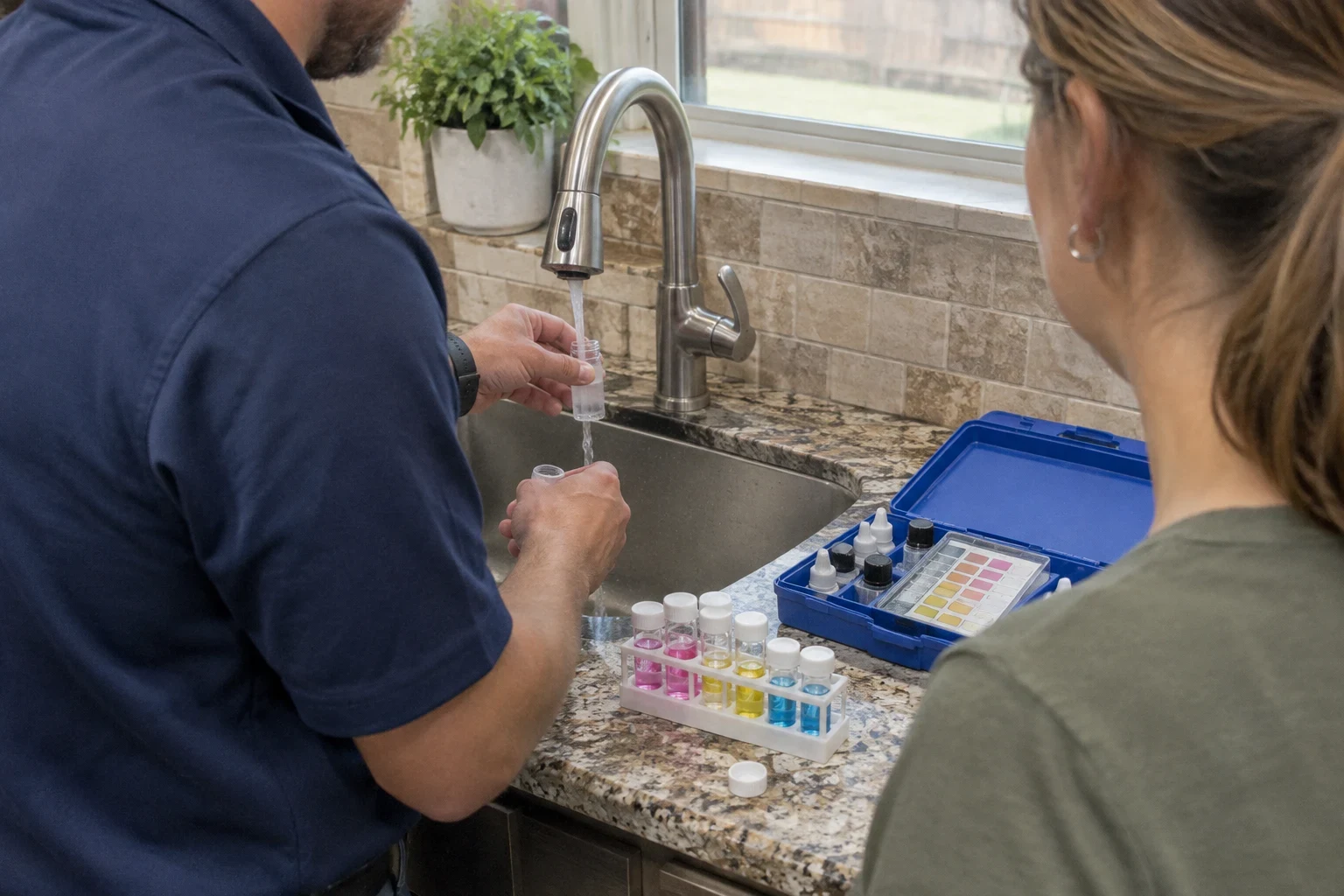
We fill sample cups at the kitchen faucet, and sometimes a second spot like a bathroom or the hot side. Most readings finish during the visit, so you see the results with us standing there.
- 3
Going over the numbers
We take each result one at a time: what's normal, what's high and what it means for your home. If nothing needs fixing, we tell you that.
- 4
A written plan to keep
If something is worth treating, we write out the options with a quote for each one. Nothing has to be decided that day. Keep it, talk it over and call back when it suits your budget.
Water testing questions
Is the water test really free?
Yes. We come out, test your water and walk you through the results at no charge. If you don't need anything, we shake hands and that's it.
Are you going to push a system on me?
We tell you what the numbers say. If your water looks fine, you'll hear that from us. If something is worth treating, you get options and a written quote, and the timing is up to you.
My city water already meets standards. Why bother testing?
Safe and pleasant are not the same thing. Water can pass every standard and still be hard enough to scale up a water heater, or carry enough chlorine to bug you. The test shows which of those, if any, apply to your home.
Do you test for lead?
Our in-home test checks hardness, chlorine, iron, pH and TDS. Lead takes a lab sample to answer properly. If your plumbing is older and lead is on your mind, we'll explain how to get that sample taken and sent off.
If I buy a system after the test, what's the warranty?
Our own warranty covers the systems we install: a lifetime warranty on tanks and ceramic discs, 5 years on the control valve, circuit board and filter media, and 1 year on labor.
How long does the visit take?
Not long. Most readings come back while we're still there, and we stick around for questions. All you need to do is make sure we can get to the kitchen sink.
Know your water before you spend on it
A free test gives you real numbers and a plan you can budget for. We serve Kyle along with Buda, San Marcos and nearby towns.