ServicesWater Softener Installation
Water Softener Installation in Kyle
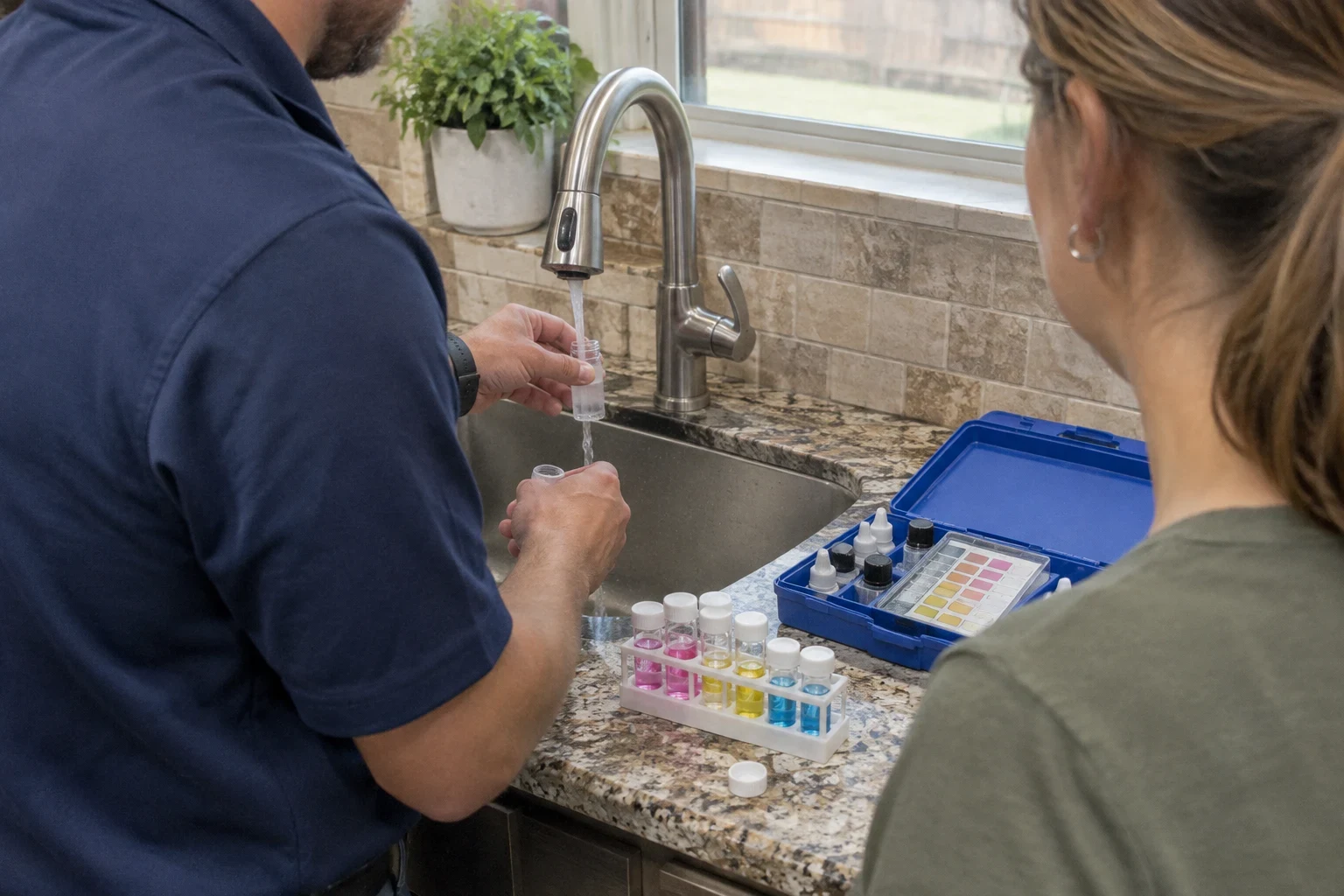
We start with a free test of the water in your home. If the hardness numbers call for a softener, we size one to your family's use and install it cleanly. You get softer water and less scale in your pipes and appliances.
Softening Hard Water, and When It's Worth It
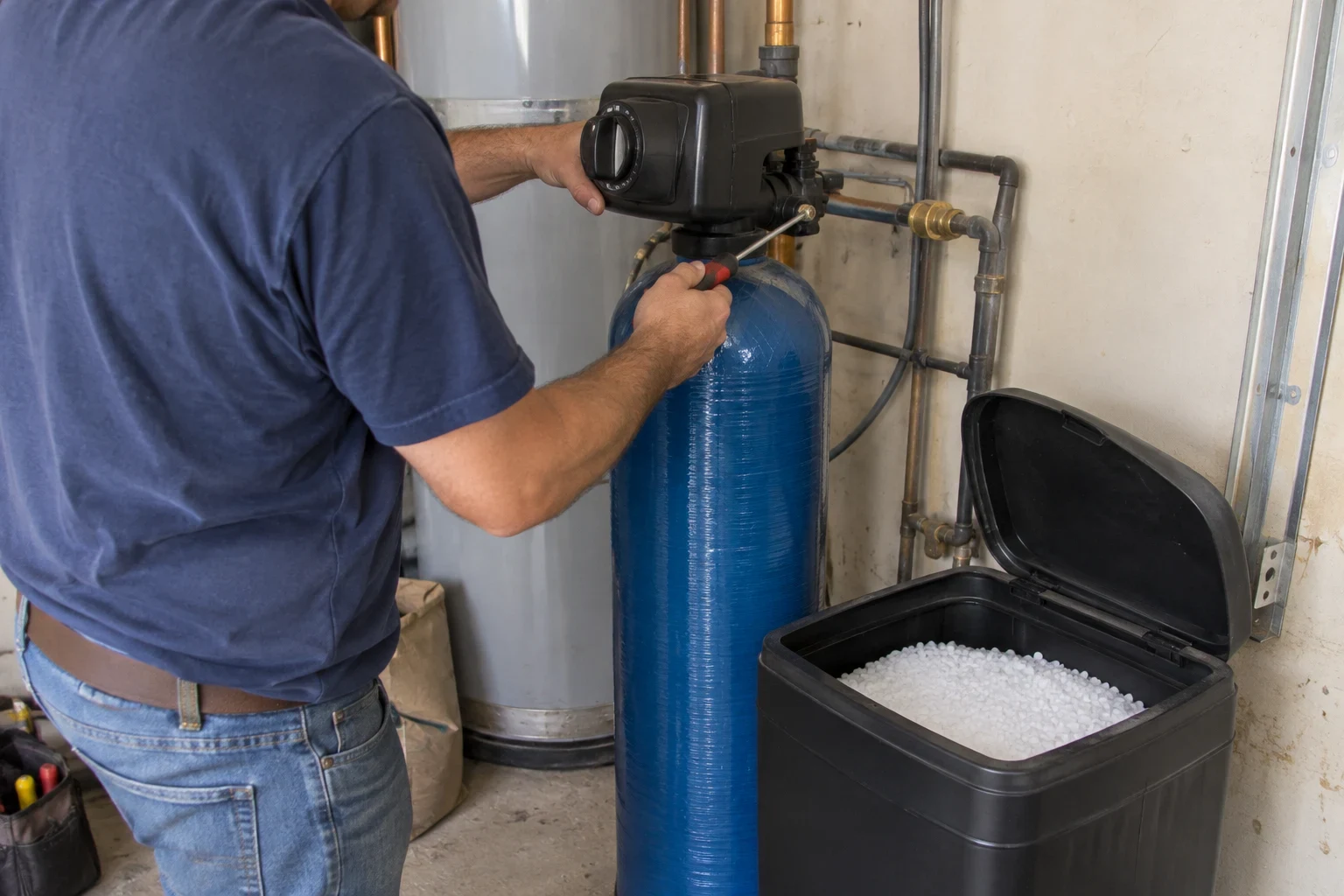
Hard water carries calcium and magnesium. A softener trades those minerals out for sodium or potassium. Those are the minerals that crust up faucets, leave film on glasses and lay down scale inside your water heater. With them gone, soap works better, fixtures stay cleaner and the heater isn't fighting buildup.
Lots of homes around Kyle ask about hardness, but the answer isn't the same house to house. So we test and show you the actual number. If a softener fits, we'll say that. If a salt-free conditioner or whole-home filtration would handle it, you'll hear that from us instead.
It's easier to deal with this before scale wears out a water heater or a dishwasher. Testing now gives you time to budget and pick the right system when it suits you, not after an appliance quits.
What You Get With the Install
- Testing before we pick a unit
- We check your hardness number and look for iron first. If iron is present, it changes the media and settings we'd use.
- A unit sized for your home
- We ask how many people live there and how much water you go through. Too small and it regenerates over and over and eats salt. Too big and you paid for capacity you don't need.
- Bypass valve and plumbing
- Every softener gets a bypass valve. One turn of the handle routes water around the unit, so the faucets keep working if it ever needs service. We tie into your existing loop or main line and check every joint for leaks.
- Drain line and programming
- The drain line gets a proper air gap. We program regeneration from your test numbers and tell you when it runs and why.
- Walkthrough and cleanup
- Before we go, we show you how to add salt, switch the bypass and read the control head. The work area is cleaned up when we leave.
Signs Your Home Needs Softer Water
Chalky buildup on fixtures
White scale on faucets, shower heads and glass doors comes from hardness minerals. You scrub it off and it's back in a week or two.
Cloudy glassware
Dishes and glasses come out spotted or hazy, even when you use rinse aid.
Soap that barely suds
Hardness minerals grab onto soap, so the lather stays thin. Shampoo and detergent bottles run out faster, and a filmy feel stays on your skin after a shower.
Rumbling from the water heater
Crackling or knocking sounds in the tank usually mean scale has collected at the bottom. The heater has to work harder and tends to fail earlier.
Weak flow at certain taps
Scale slowly clogs aerators and shower heads. If cleaning them only helps for a few weeks, hard water is a good bet.
What Sets the Cost of a Softener
We don't charge for installation, so your cost is mostly the equipment your water calls for. Testing first means you buy the capacity you need and no more. These are the things that push one system's price above another's.
Hardness level and people at home
The harder your water and the more people using it, the more grain capacity the unit needs. Bigger tanks hold more resin, and that raises the price.
Iron showing up in the test
Iron can foul softener resin. If we find it, you may need a different media or a separate iron filter placed before the softener.
Where the unit can go
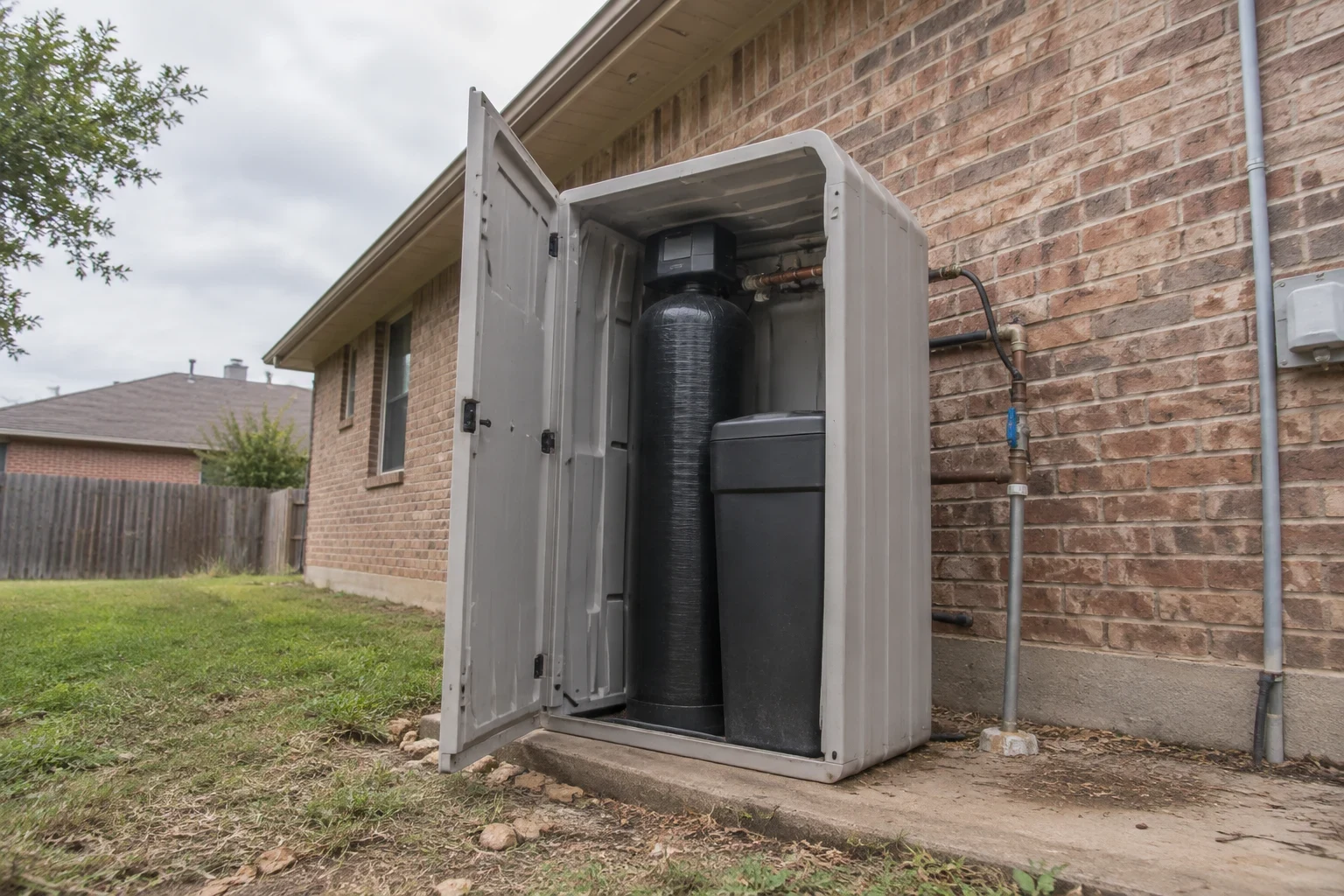
If your home already has a softener loop, the job is simple. If not, we need a spot by the main line with a drain and an outlet close by, and that can take extra fittings and pipe.
One tank or two
Most homes do fine with a single tank. A twin tank unit keeps soft water coming while one tank regenerates, but it costs more to buy.
What Happens From First Call to Soft Water
- 1
Free test at your home
Give us a call and we'll pick a time to come test your water. We read the results with you right there.
- 2
Our honest take
We tell you if a softener makes sense, what size and the reason behind it. Your quote lists each piece of equipment, and you can get it by phone after the visit.
- 3
Install day
On most homes we're finished in a few hours. Water shuts off just for the stretch when we connect to your plumbing. We put down floor protection, set the tanks, hook up the bypass and drain, then program the control head.
- 4
Testing and handoff
We run a full regeneration, test the softened water and look over each fitting. Then we cover salt and simple care with you and pack up.
Common Questions About Softeners
Should I get a softener or a salt-free conditioner?
It comes down to the result you want. A softener pulls the hardness minerals out, so the water is truly soft and soap lathers well. A salt-free conditioner changes the minerals so they stick less, but they're still in the water. Your test results help us steer you to one or the other.
Will the water taste like salt?
Hardly anyone notices it. The softener does add some sodium, and the amount goes up as hardness goes up. If you want it out of your drinking water, a reverse osmosis system at the kitchen sink will take it out, or you can run potassium in place of salt.
How often will I buy salt?
That depends on how hard your water is, how much you use and how the unit is set. A softener that's sized right and set from your test numbers regenerates only when it needs to, so it goes through far less salt than one running on a set schedule. Before we leave, we'll lift the brine tank lid with you and show you what a low salt level looks like.
What does the warranty cover?
Our own warranty covers the systems we install: a lifetime warranty on tanks and ceramic discs, 5 years on the control valve, circuit board and filter media, and 1 year on labor. We'll go through the paperwork with you once the install is done.
How long is my water off on install day?
Plan on a few hours for a typical install. Your taps go dry only during the plumbing connection itself. If your home has no loop and we have to run new pipe, the job takes longer, and we tell you that ahead of time so you can plan around it.
Is there much to maintain?
Mostly you add salt when it gets low. Now and then, look for a salt bridge, which is a hard crust that forms across the brine tank and keeps salt from dissolving. We'll show you how to find one and break it loose.
Find Out What's in Your Water First
A test takes the guesswork out of buying a softener. We'll give you the numbers, a straight answer and time to plan. Installation is free if you go ahead.